HOW PTB WORKS – TECHNOLOGY PLATFORM
BUILT ON EXISTING TRAIN INFRASTRUCTURE

Deterministic, train-wide communication over the train power distribution cable already required for train-wide energy supply.

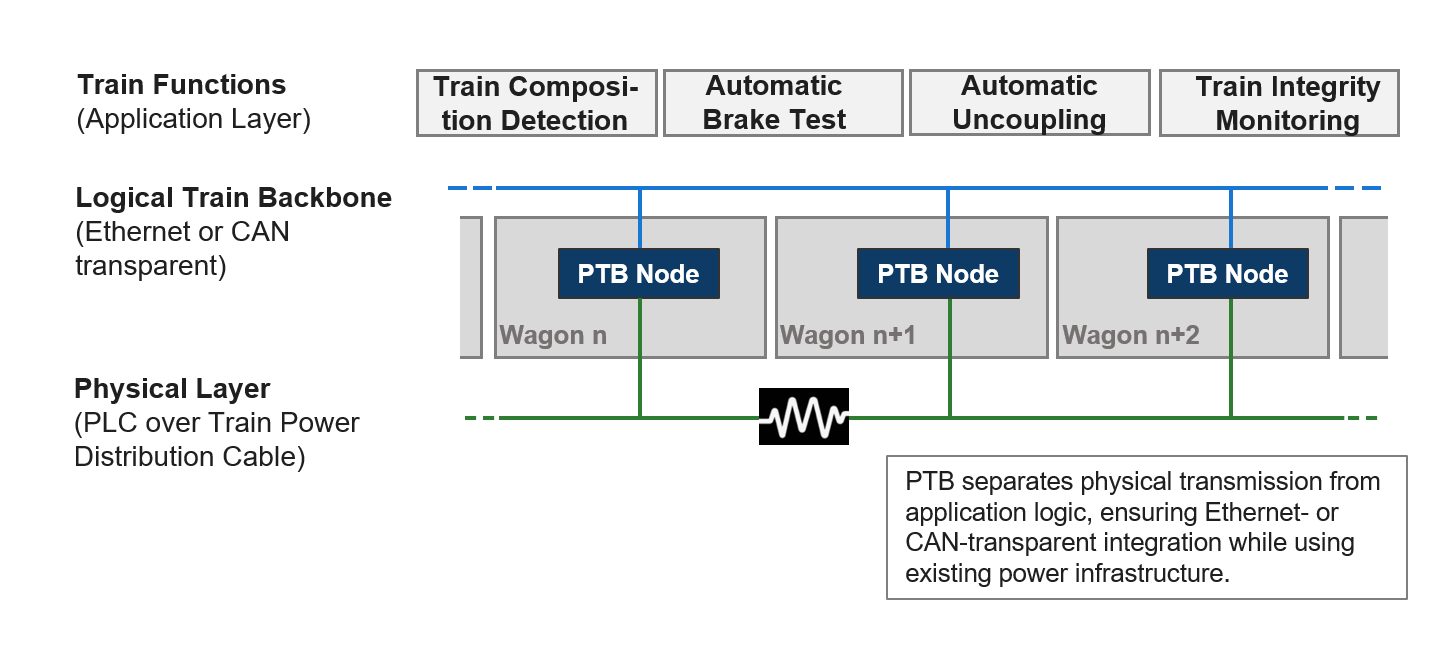
Logical Architecture

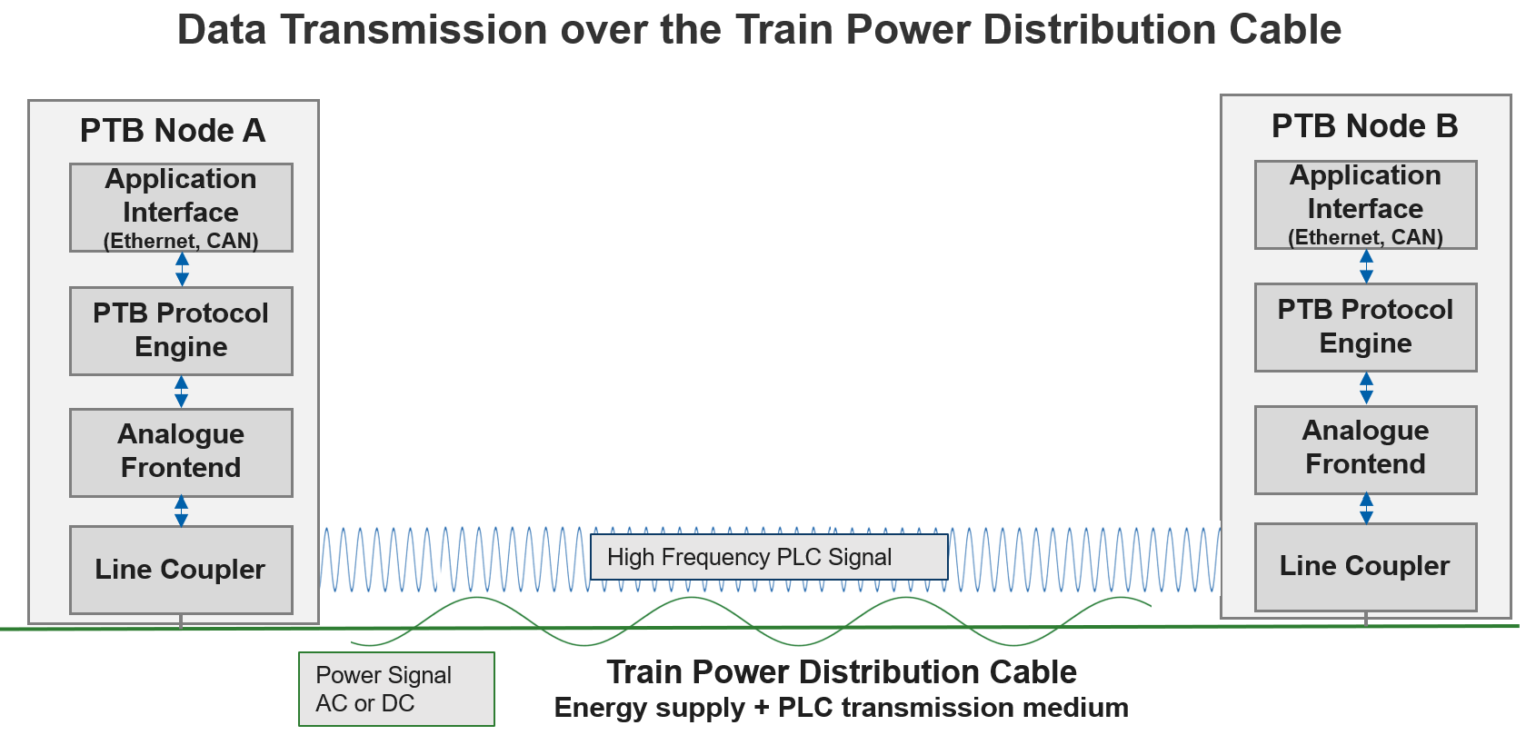
The train power distribution cable simultaneously supplies energy and serves as the communication medium.

This architecture separates:

Application layer (Ethernet / CAN systems)

Logical train backbone

Physical transmission layer (one cable for power and data)

Physical Layer: Broadband PLC over Train Power Distribution Cable

PTB uses broadband Power Line Communication (PLC) based on ple-tec’s Power Line data bUS (PLUS) platform which specifically targets high-reliability and real-time (Mission-and-Time Critical) communication over power distribution networks in aircraft, trains, etc. PLUS uses the physical layer of the IEEE 1901 standard.

PLUS is optimized for challenging communication channel conditions which are common for the freight train power distribution cable

Signal damping and reflections

Impedance variations (e.g., in e-couplers in the DAC)

Electrical noise and electromagnetic interference (EMI)

PTB maintains stable communication without any shielding, shelter or corrugated pipes for the train power distribution cable.

Any AC or DC voltage for the train power distribution cable can be used.

Each wagon is equipped with a compact PTB Node that couples non-intrusively to the train power distribution cable.

Automatic Train Topology Detection (PLUS-TTD)

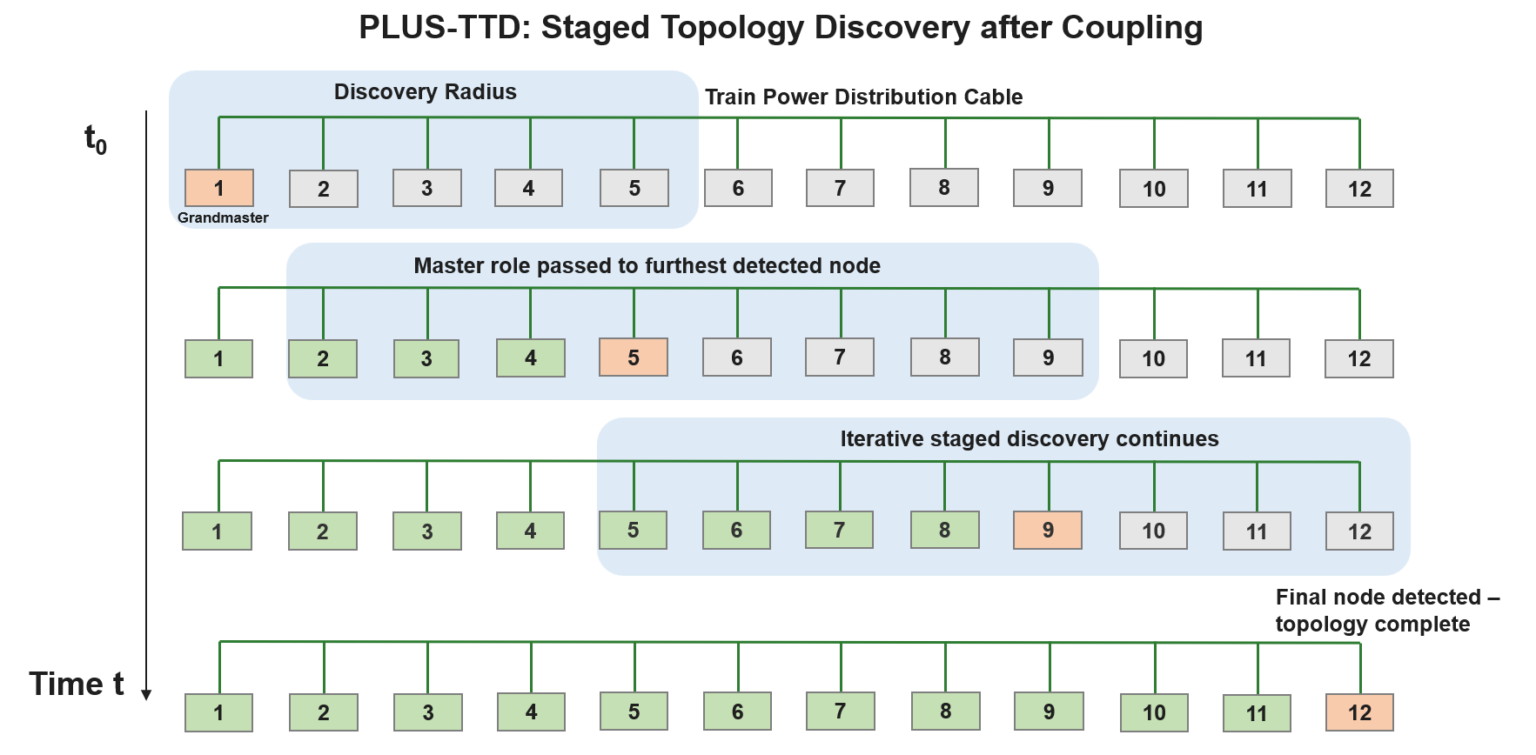
After every coupling or uncoupling event, PTB automatically detects and reconstructs the train topology, based on the integrated PLUS-TTD protocol.

Capabilities of PLUS-TTD include

Wagon order determination

Direction detection

Identification of last wagon

Dynamically allocates PTBN addresses

Based on high-precision time-of-flight measurement

The topology is detected without any manual configuration.

This enables the Automated Train Functions:

Train Composition Detection

Automated Brake Testing

Train Integrity Monitoring

Deterministic Communication – PLUS-TOKEN Protocol

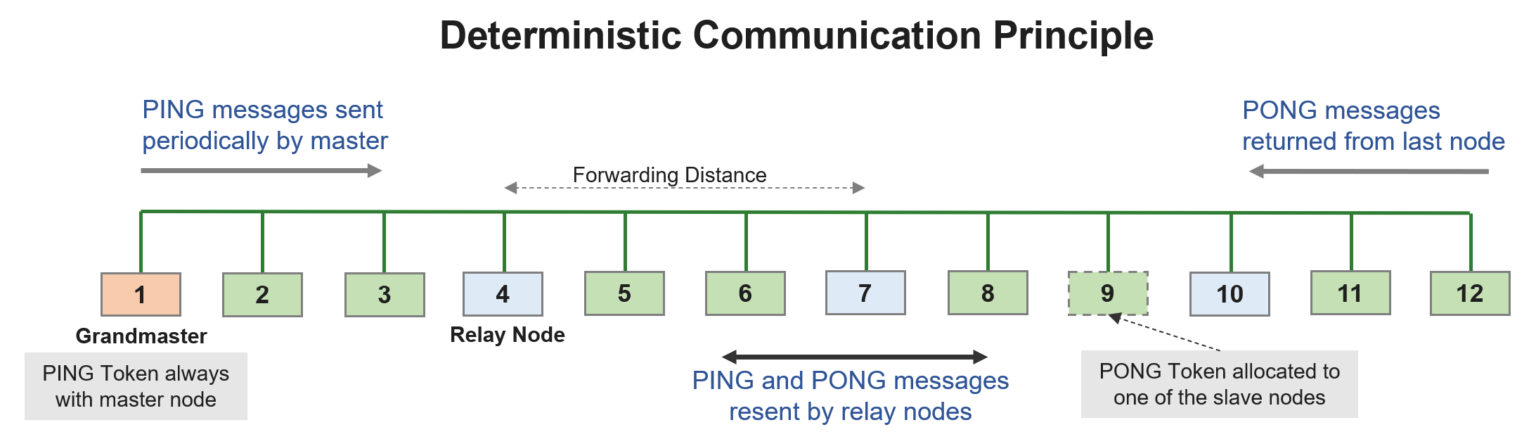
Beyond the physical layer, PTB implements rail-specific higher-layer protocols such as PLUS-TOKEN.

This protocol

Coordinates message exchange across the shared medium

Allocates guaranteed transmission slots

Prevents collisions

Provides known worst-case latency

Deterministic behaviour is essential for time-critical functions in the Full Digital Freight Train.

Key characteristics

Predictable latency

Controlled access to medium

Scalable across long train consists

Designed for Real Coupling Processes

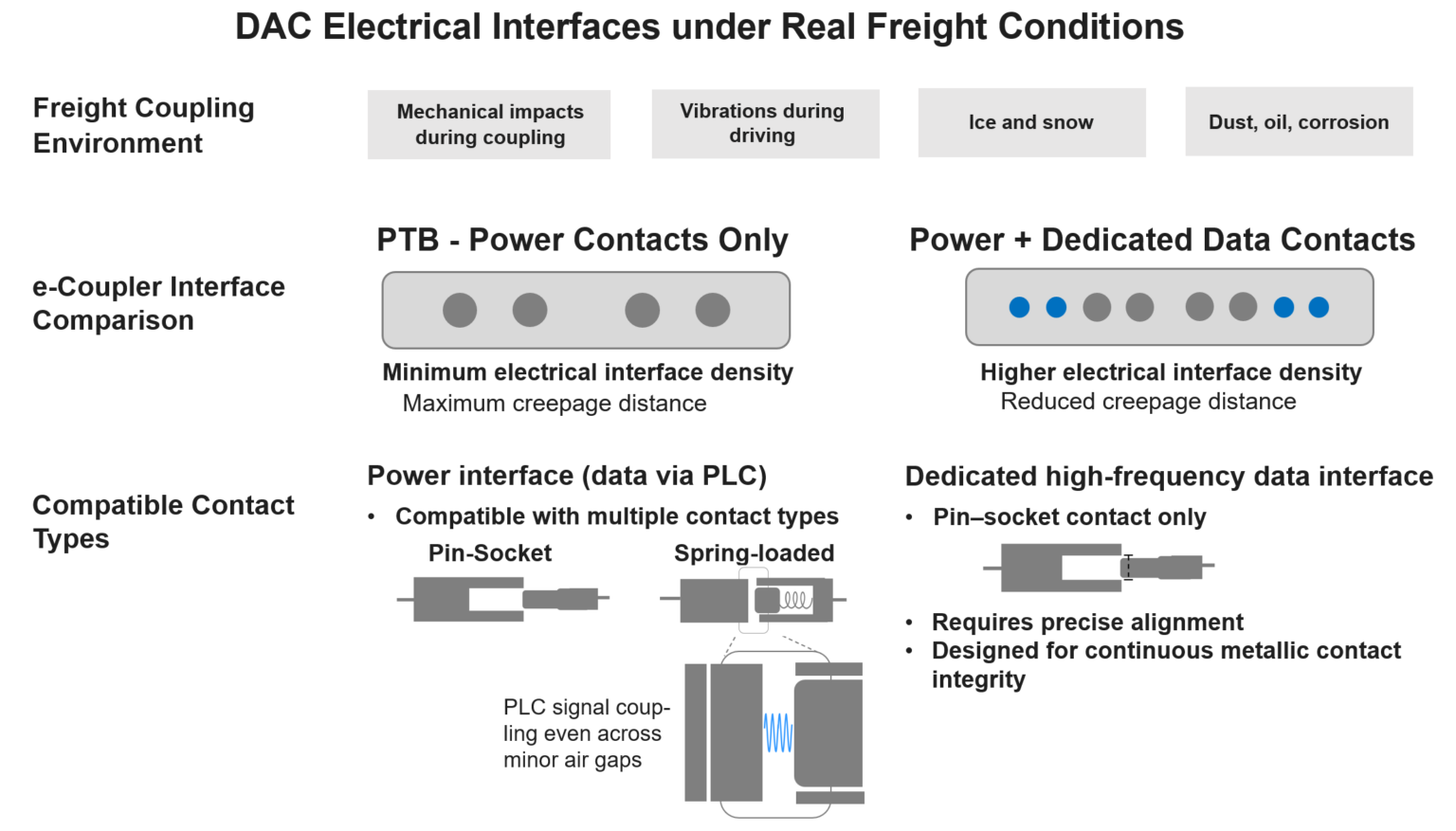
Freight train coupling is mechanically harsh. The DAC, including the e-coupler and its electrical contacts, are exposed to harsh operational and environmental impacts both during the coupling process and while driving.

PTB avoids sensitive data contacts in the coupler by transmitting communication signals over the power contacts, which are designed for high mechanical robustness.

Advantages

Minimum number of electrical contacts in the e-coupler interface

Maximum size of electrical contacts for increasing robustness

Maximum creepage distances between electrical contacts and to the e-coupler housing

Compatibility with multiple contact types

Spring loaded contacts more tolerant to ice, dirt and wear as well as misalignment

Communication reliability is preserved without introducing fragile interfaces.
System Integration

PTB provides Ethernet- or CAN-transparent data transport, allowing higher-layer applications to operate independently of the physical medium.

This ensures:

Compatibility with TCN-based systems

Integration with existing wagon electronics

Long-term scalability

PTB functions as a backbone platform — not a proprietary silo.

EXPLORE THE EVIDENCE