Fewer cables. Fewer interfaces. Fewer failure modes. Lower lifecycle cost.
The Powerline PLUS Train Backbone (PTB) is an operationally-proven communication backbone for the Full Digital Freight Train.
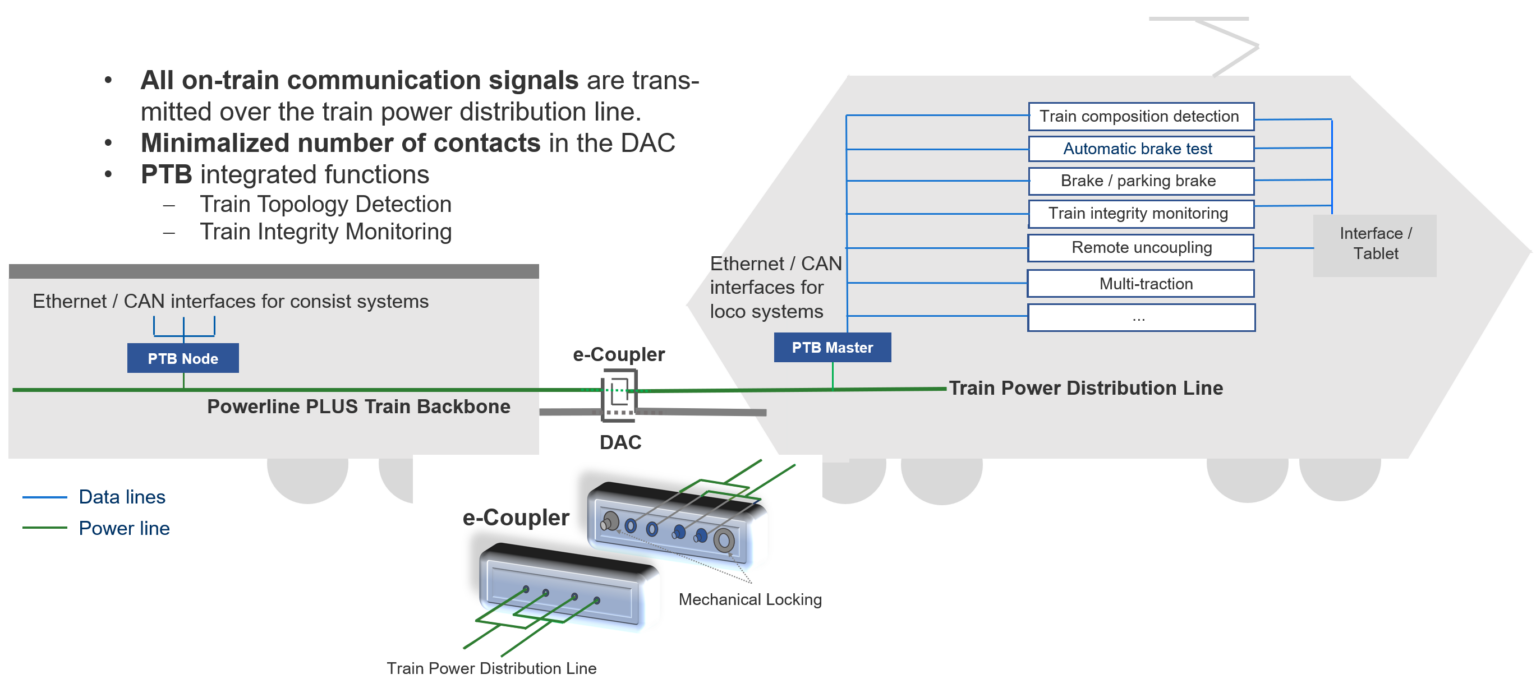
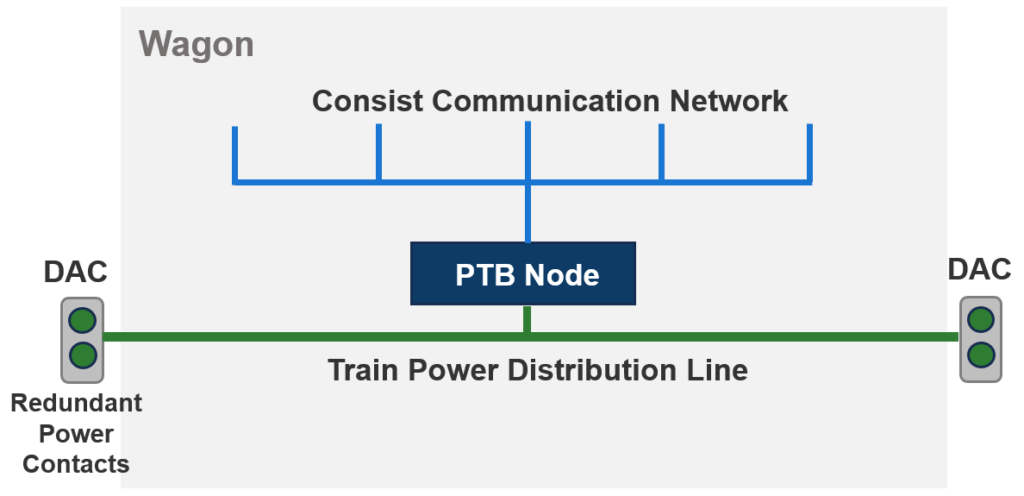
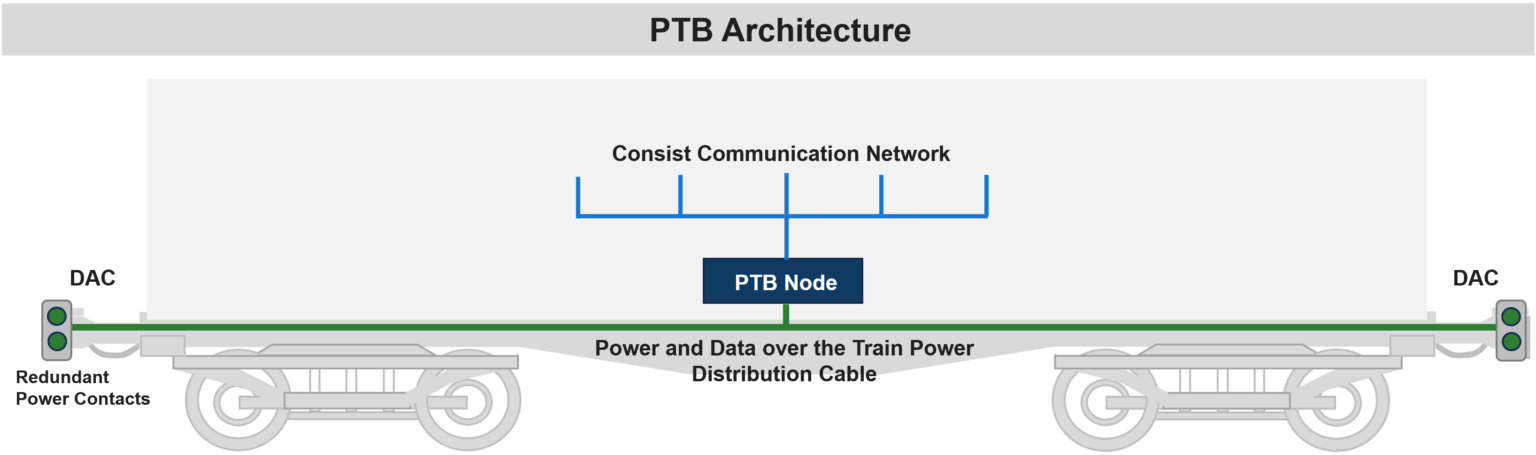
PTB enables reliable, train-wide Ethernet- or CAN-transparent communication by transmitting data over the train’s existing power distribution cable — without additional data contacts and without dedicated communication cabling.
Designed for rail freight operations, PTB reduces backbone complexity at its root.
PTB Architecture - Rail freight operations define the architecture
Freight wagons operate under harsh and variable conditions:
–Mechanical shock during coupling
–Continuous vibration during drives
–Ice, snow and contamination
–Extreme temperature variations
–Highly diverse wagon fleets
–Strong cost pressure
–Dedicated data contacts in the coupler
–Separate data harness systems
–Additional routing constraints
What PTB delivers
Robust deterministic train-wide communication
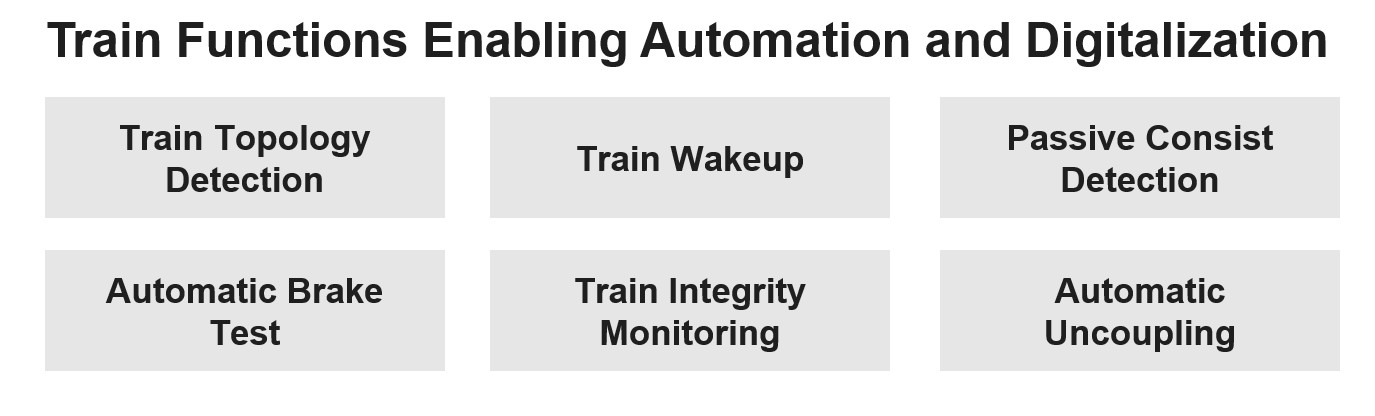
Supports essential train functions enabling automation and digitalization for rail freight operations
Sufficient throughput with reserve capacity
PTB exceeds all defined data rate requirements of the Full Digital Freight Train by a significant margin.
•Throughput sufficient for all current automated train functions
•Substantial reserve capacity for future applications without changes to the communication infrastructure
•System design prioritises deterministic behaviour, low latency and reliability over raw bandwidth
PTB provides Ethernet- / IEC61375- or CAN-transparent data transport. Higher-layer protocols and applications operate independently of the physical medium. This enables:
•Integration with Train-Communication-Network (TCN-) based systems
•Compatibility with existing wagon electronics standards
•Enables modularity
•Future-proof system evolution
PTB thus protects investment while enabling automation and digitalization.
Robust coupling architecture
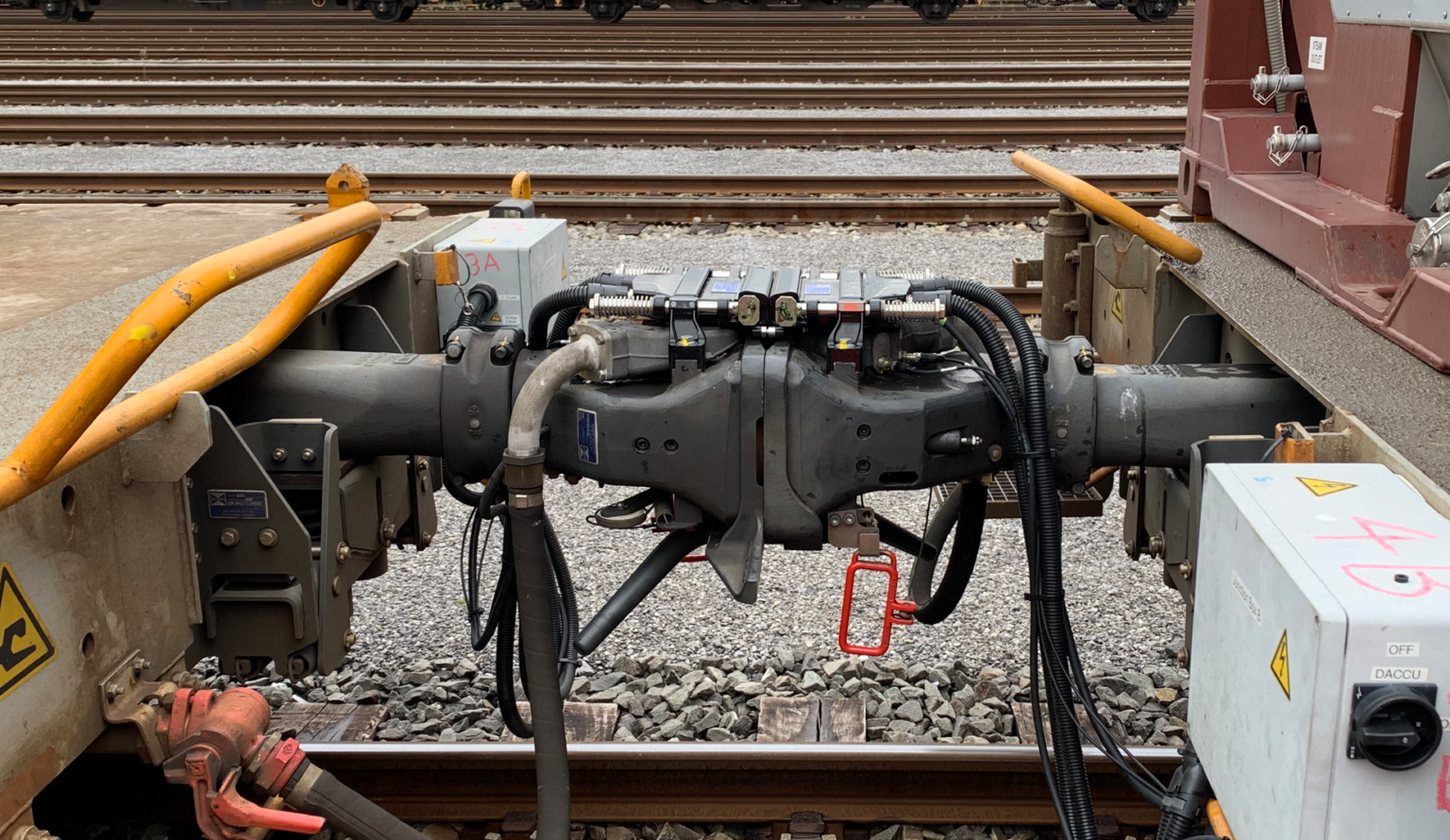
•Data transmitted via mechanically robust power contacts
•No dedicated data contacts in the DAC e-coupler
•Compatible with spring-loaded and pin–socket contacts
Designed for real coupling processes involving impact, misalignment and contamination.
Minimum and repeatable installation and retrofit
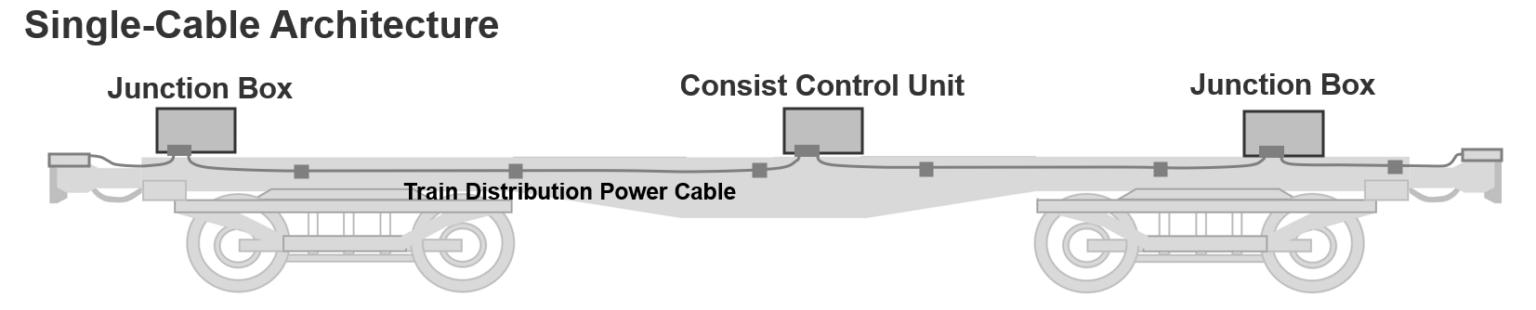
PTB requires only the train power distribution cable — installed already as it is mandatory for powering the systems of the Full Digital Freight Train.
•One cable for power and data
•Unified routing path
•No shielding or separation routing required – as PTB is robust against electromagnetic interference (EMI).
•Minimal variation across wagon types – minimum mounting effort – minimum installation retrofit cost at scale
PTB significantly reduces the complexity of installations and retrofits across Europe’s diverse rail freight fleets.
PTBN – The PTB Product Platform
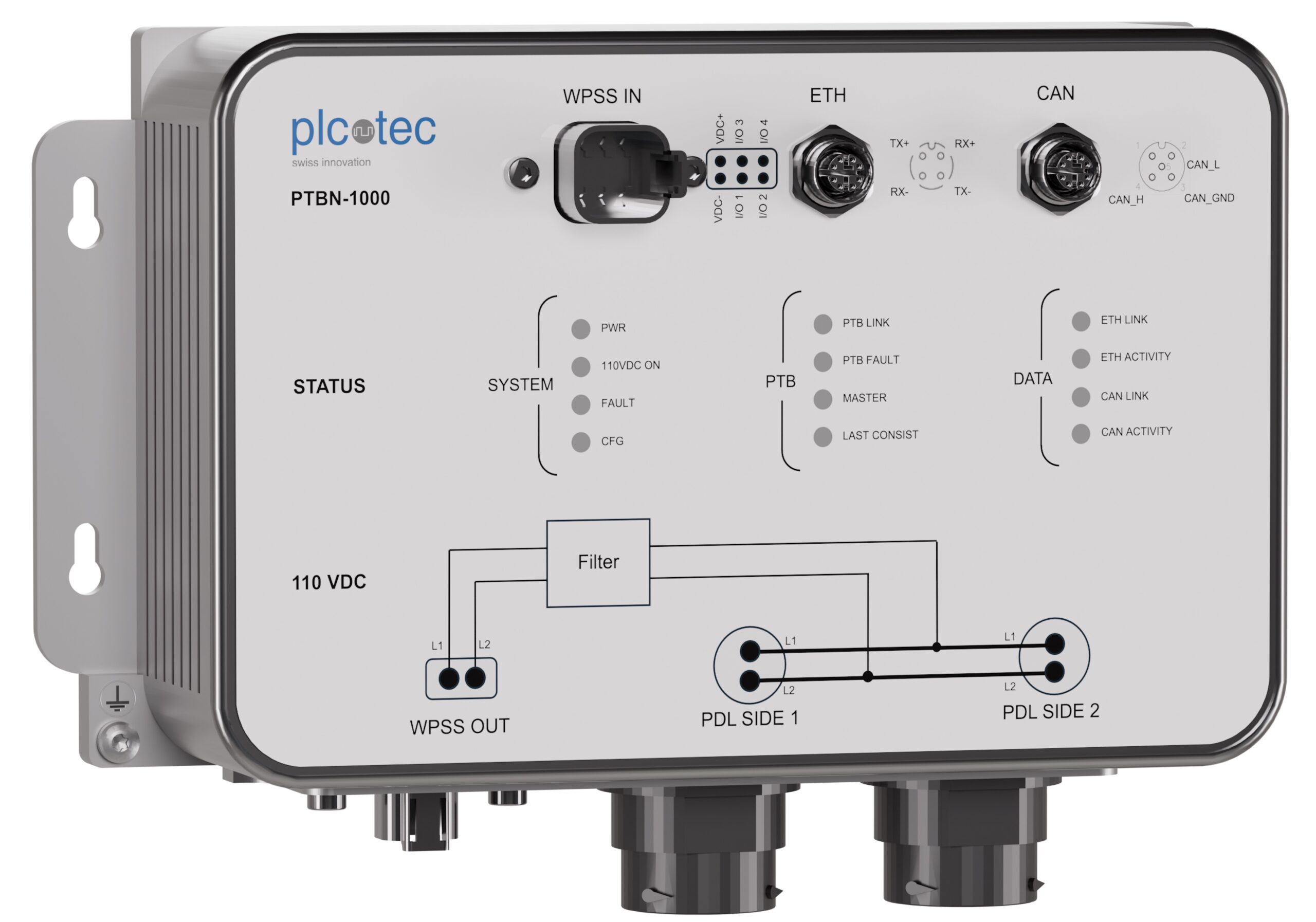
PTB is implemented through the PTBN (PTB Node) product platform — a compact industrial hardware module that integrates backbone communication, powerline interface and gateway functionality in a single unit.
The PTBN is the hardware building block of the PTB network.
Each wagon or traction unit is equipped with one PTBN, enabling deterministic train-wide communication and seamless integration with local consist systems.
The PTBN functions as a gateway between:
•The train-wide PTB backbone network
•The local wagon consist network
It manages communication and data routing between backbone and consist devices, providing Ethernet and CAN interfaces for integration with wagon control units and higher-layer systems.
Two-component architecture
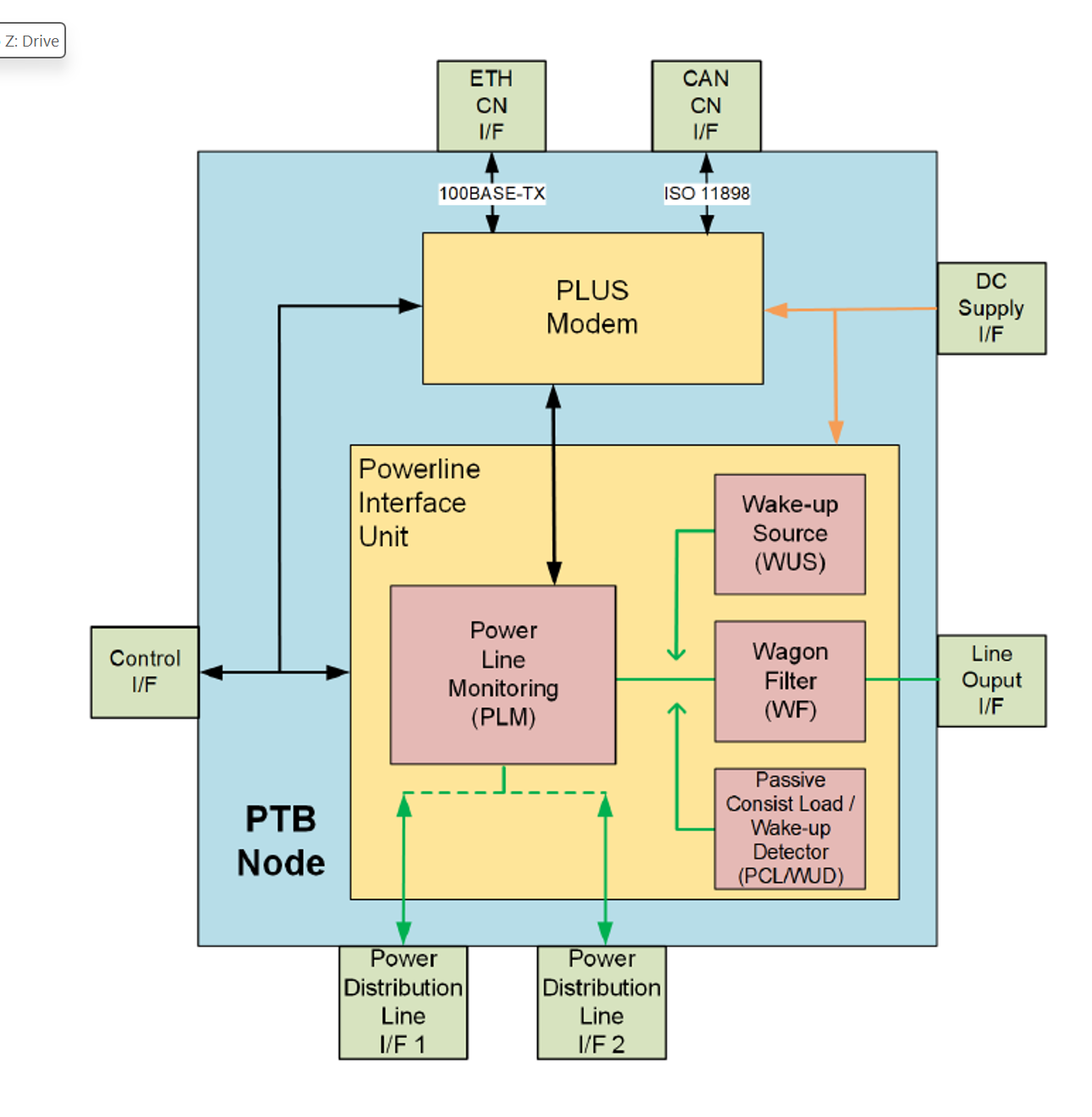
The PTBN comprises two integrated functional units:
Powerline Interface Unit (PIU) – manages all interactions between the PTBN and the train power distribution cable. It includes:
•Wagon Filter (WF) – suppresses high-frequency noise from wagon power supplies, improving communication signal quality
•Power Line Monitoring (PLM) – current and voltage measurement on the power line
•Wake-Up Source (WUS) – switchable DC source for train wake-up and detection functions
•Wake-Up Detector (WUD) – detects voltage presence and activates the system from sleep mode
•Passive Consist Load (PCL) – enables detection of passive consists during train formation
This integrated design supports topology detection, wake-up functionality and power line supervision without additional infrastructure.
PLUS Modem – implements the PTB communication protocol and provides gateway functionality between backbone and consist networks.
•Ethernet interfaces
•CAN interfaces
•GPIO-based data interfaces
•Support for IEC 61375-based integration where required
The protocol is implemented in hardware using a flash-based FPGA architecture.
Industrial Hardware Platform
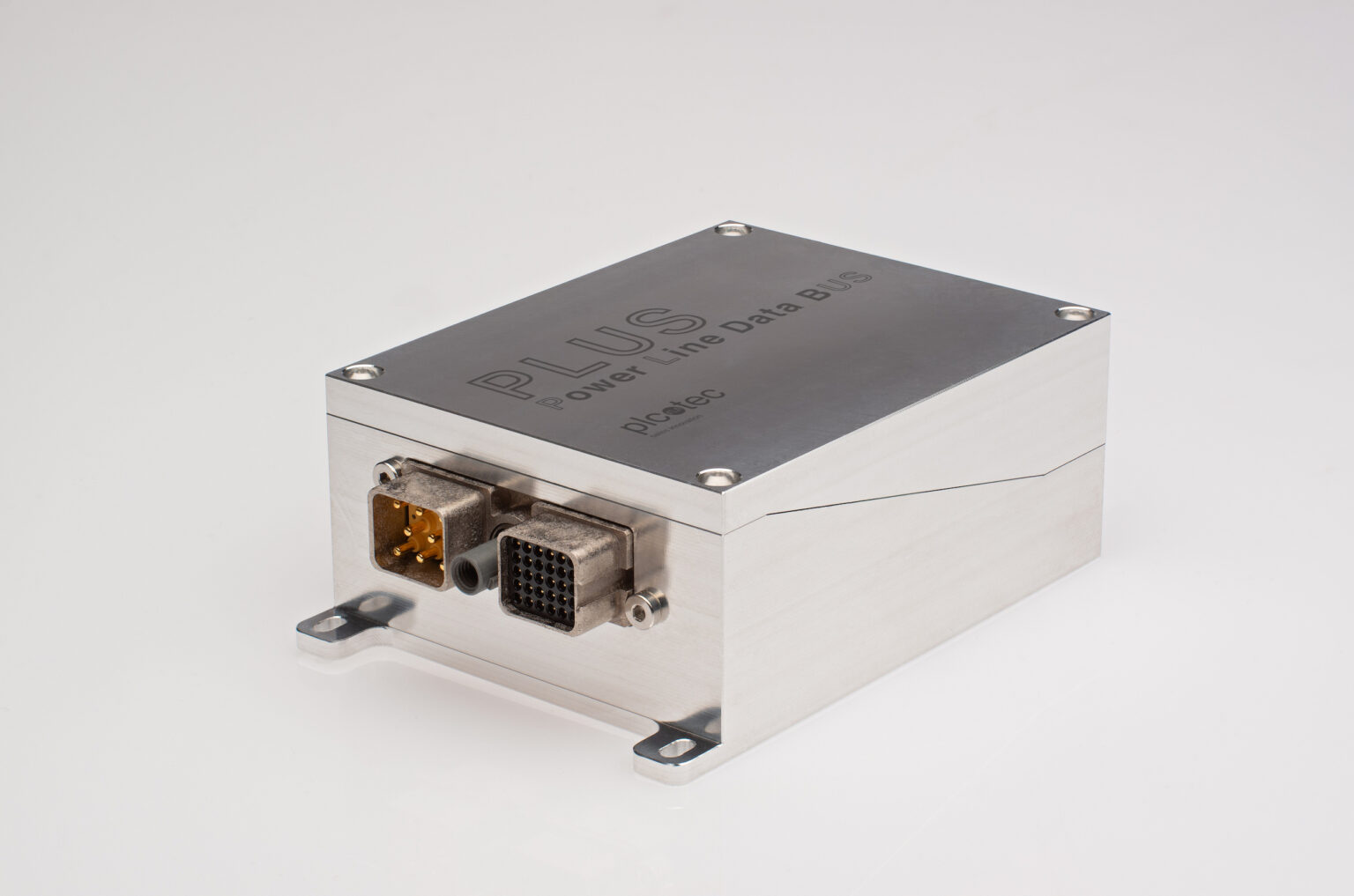
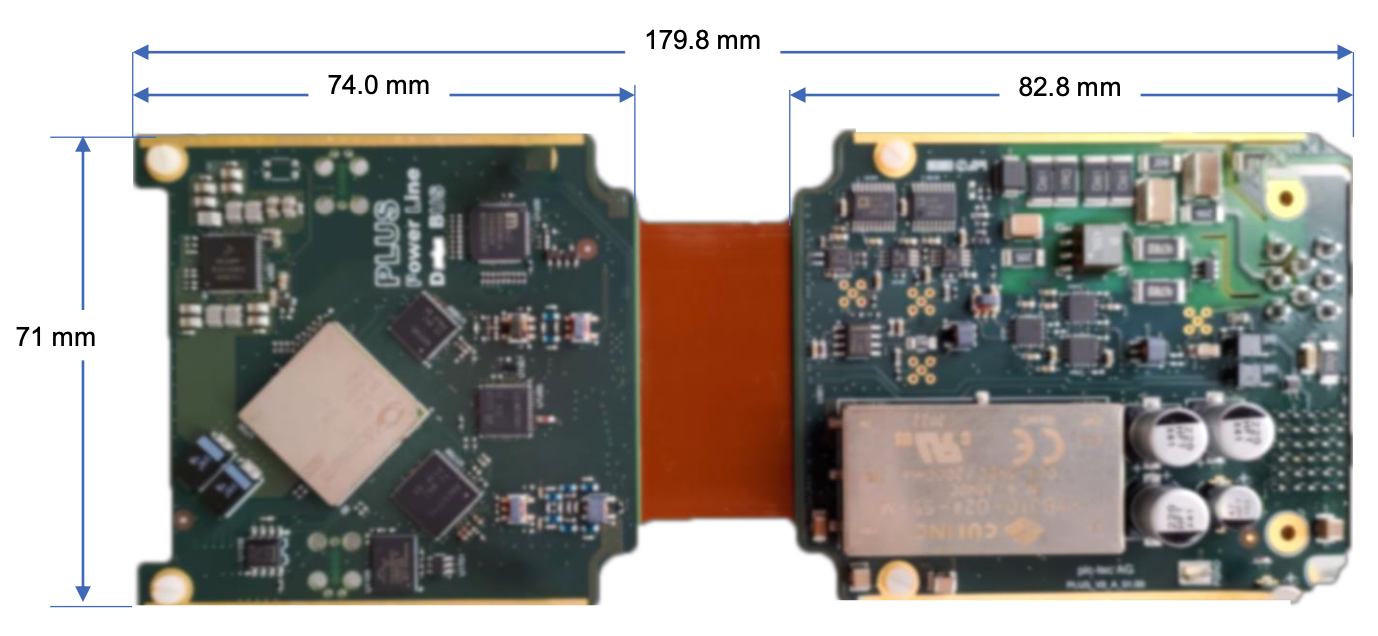
The PTBN is based on plc-tec’s PLUS-V2 hardware platform, which has been extensively tested in field trials.
Key characteristics:
•Flash-based FPGA implementation
•Low power consumption
•Secure and reliable hardware design
•In-service software update capability
•Compact rigid-flex PCB design
The FPGA architecture enables in-service updates and long-term adaptability.
Flexible deployment formats
The PTBN platform is available in two physical formats:
1.Ruggedized housing with standardized connectors for deployment in harsh industrial environments.
2.Compact printed circuit board for integration into wagon or locomotive onboard units.
This flexibility enables deployment either as a standalone module or as an embedded subsystem within customer-specific control devices.
Production-ready integration platform
The PTBN provides:
•Product reference design for PTB-based implementations
•Near-product-level maturity in form factor, weight and production cost
•Readiness for integration into industrial product development environments
•Suitability for large-scale field deployment
•PTB is therefore not only a validated backbone architecture — it is supported by an industrialised hardware platform designed for integration and deployment.
PTB Starter Kit – Entry point into PTB integration
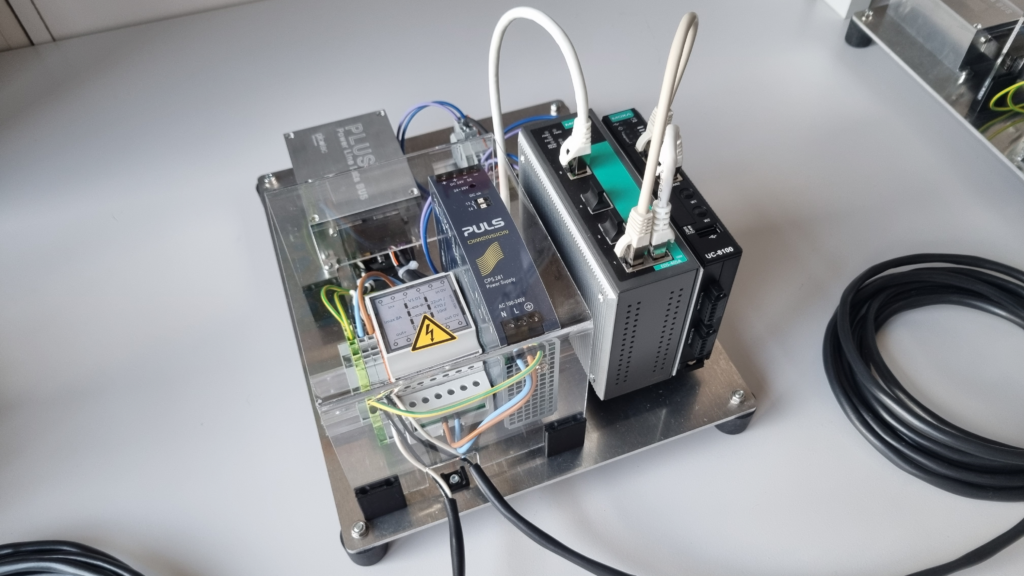
The PTB Starter Kit provides a complete environment to test, integrate and validate the Powerline PLUS Train Backbone with your own train function applications.
•Enabling communication over the train’s power distribution line without additional data cables.
•Supports a wide range of AC and DC voltages
•Functions as a Layer-2 switched Ethernet network, allowing seamless deployment of Ethernet and IP-based applications.
•The kit includes an industrial embedded PC for network management and testing, along with a web-based visualization interface for real-time monitoring of the PTB network and topology.
Platform-level summary
With PTBN, the PTB is delivered as:
•A validated communication architecture
•A deterministic protocol implementation
•A compact industrial hardware module
•A scalable integration platform
This combination ensures that PTB can be deployed as a complete backbone solution — from architecture to hardware implementation.
Simplicity as a Design Principle