PTB VS. SINGLE PAIR ETHERNET (SPE)
EVALUATING BACKBONE ARCHITECTURES FOR RAIL FREIGHT ROLLOUT

The introduction of a digital backbone for European freight trains is not a laboratory exercise. It is a large-scale retrofit programme across hundreds of thousands of wagons operating under harsh mechanical and economic conditions.

The decisive criteria are robustness under real operating conditions, economic scalability across diverse fleets, and demonstrated field validation.

1. Robustness in the Freight Rail Operations

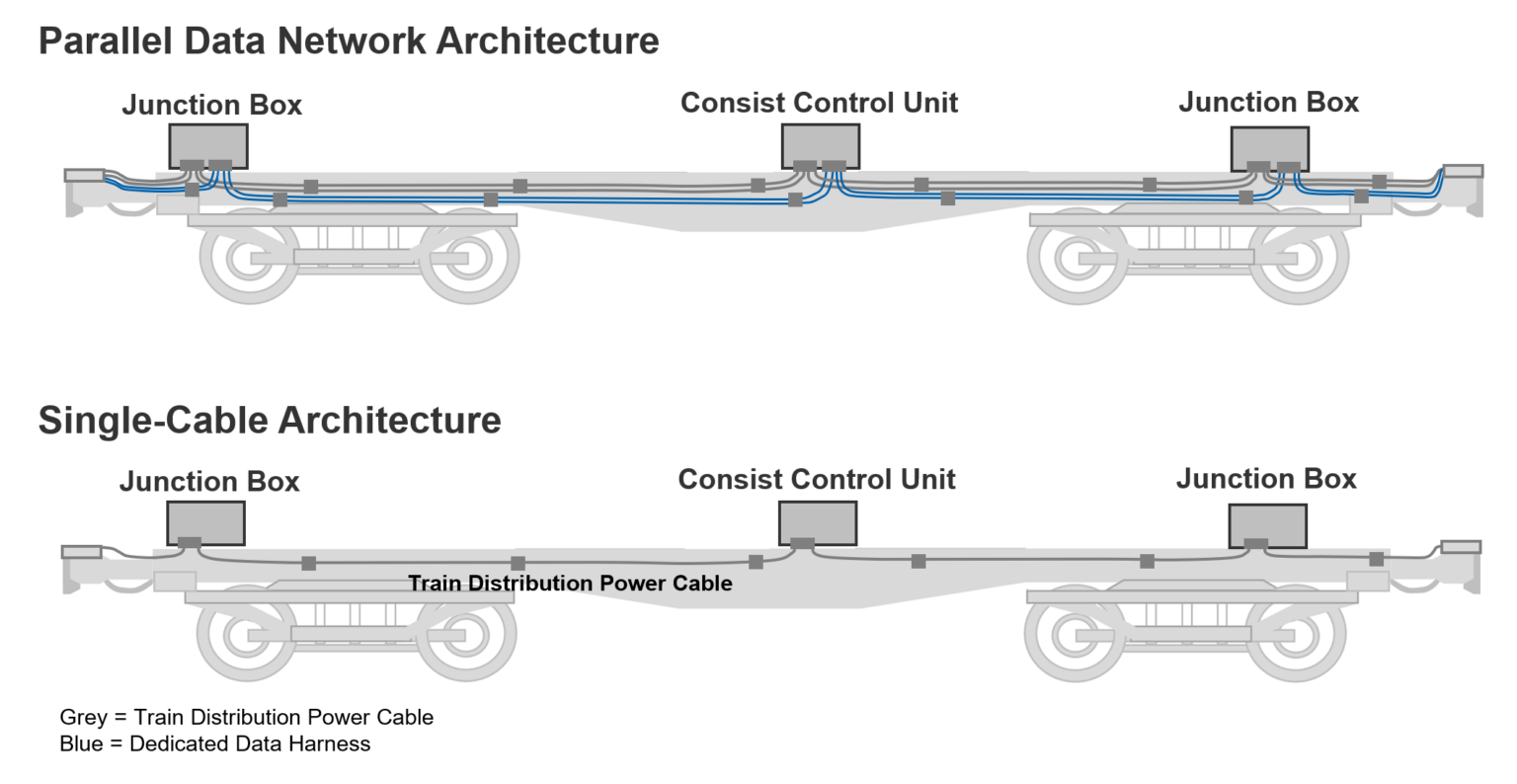
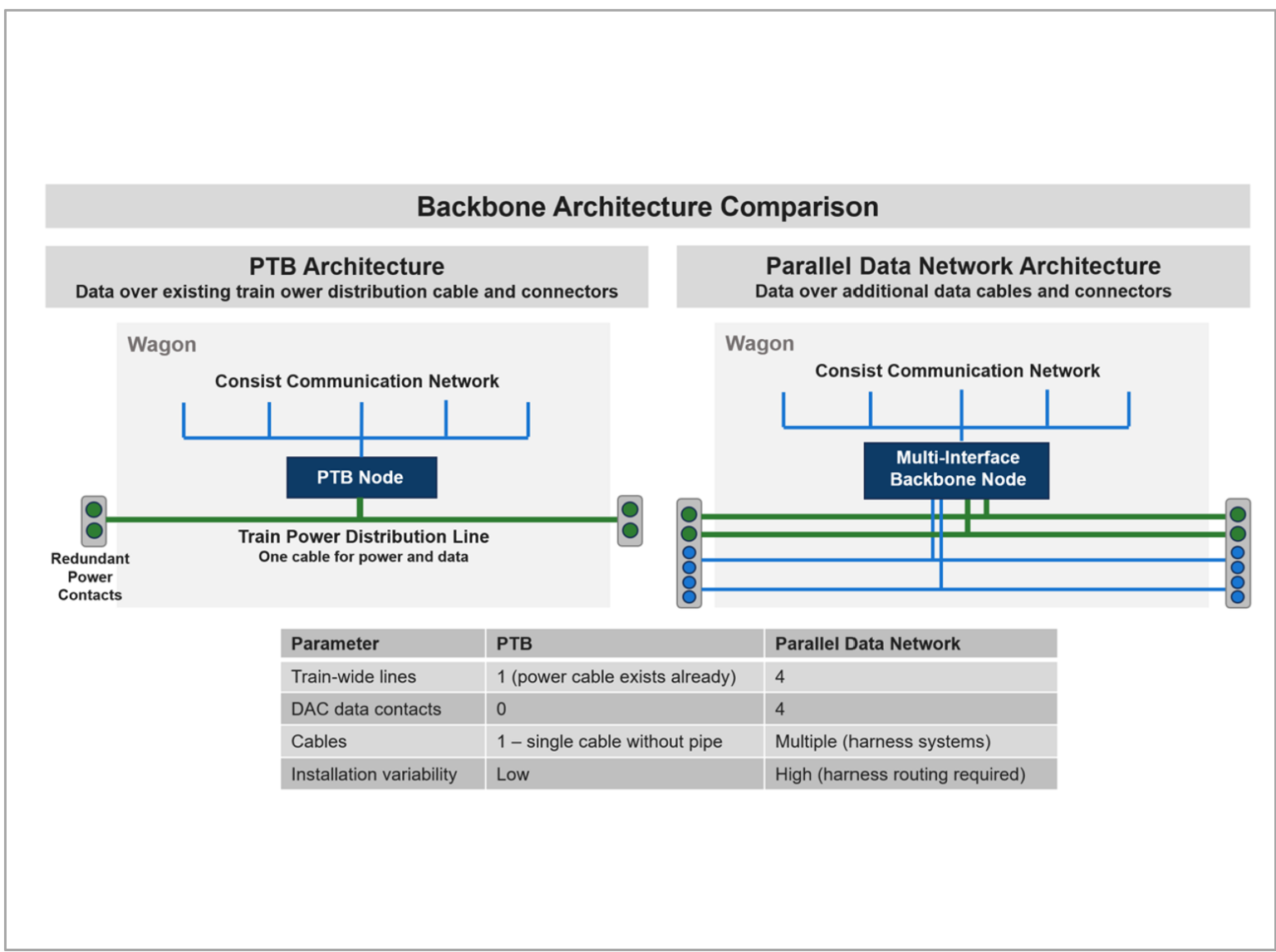
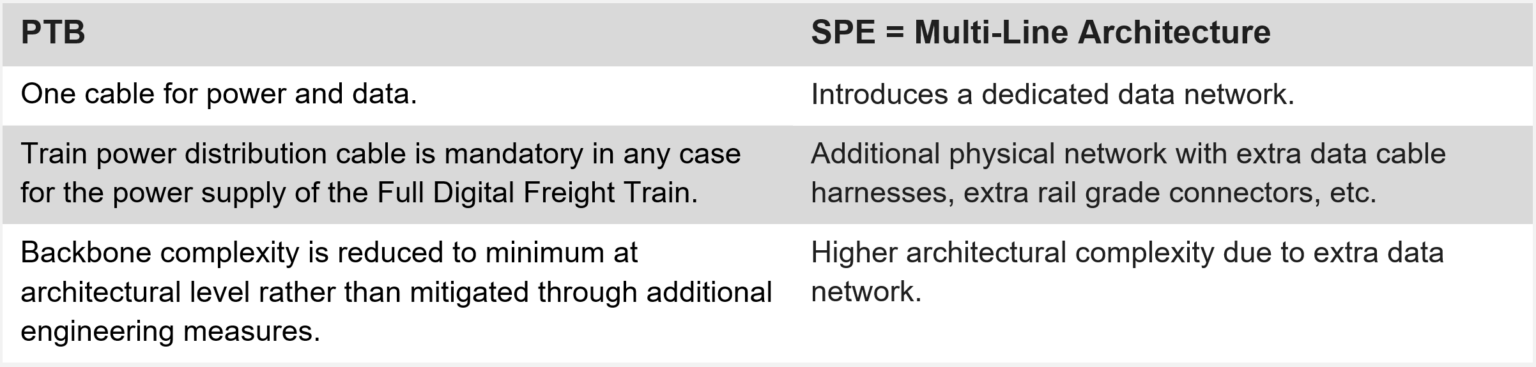
Simple Architecture: Single Cable vs. Parallel Data Network

Architecture determines installation risk, certification exposure, life-cycle costs, maintenance burden and operational reliability.

Implication: Higher architectural complexity with separate SPE data network.

Coupling under Real Rail Freight Conditions - DAC Electrical Interface Architecture

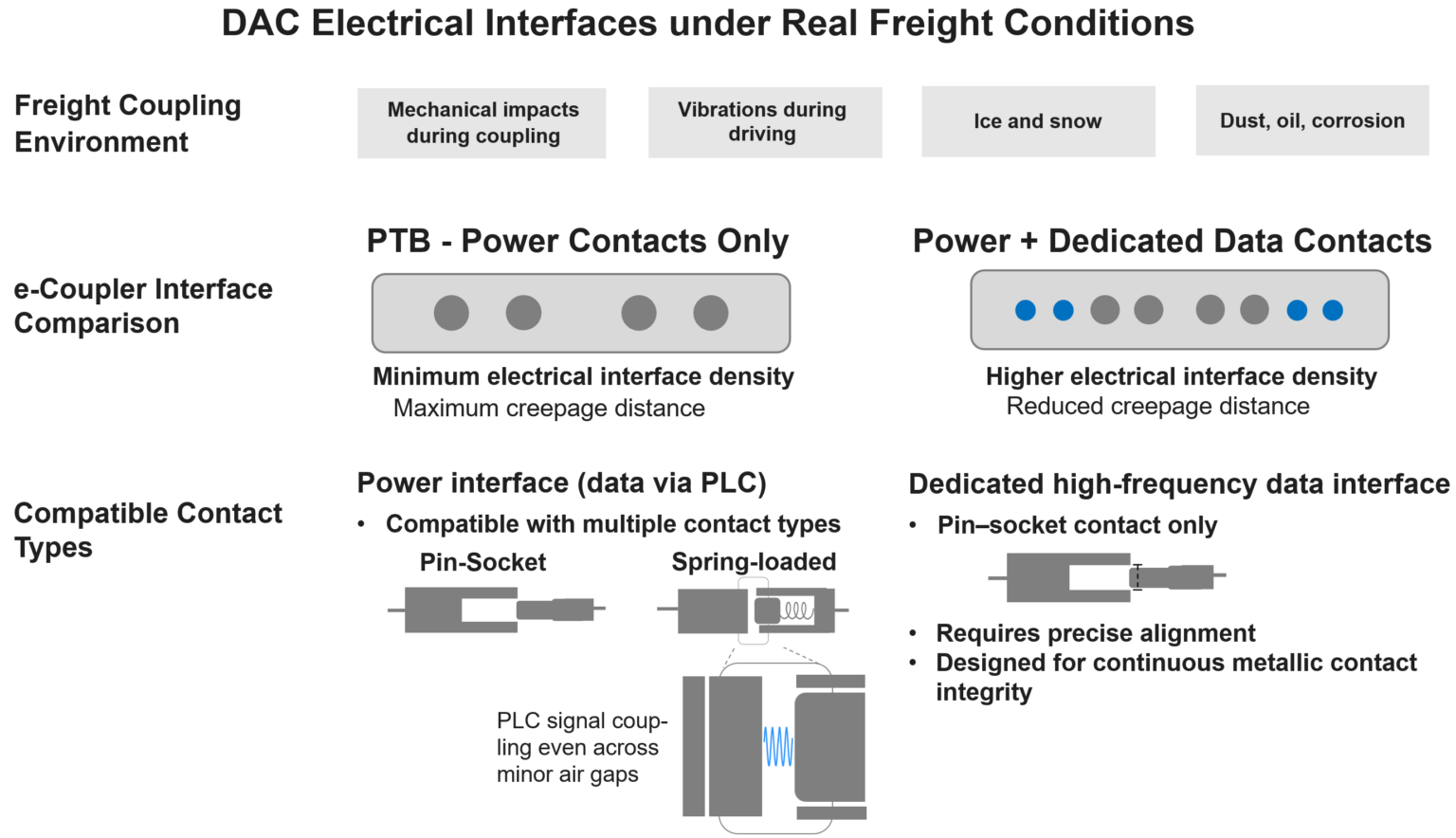
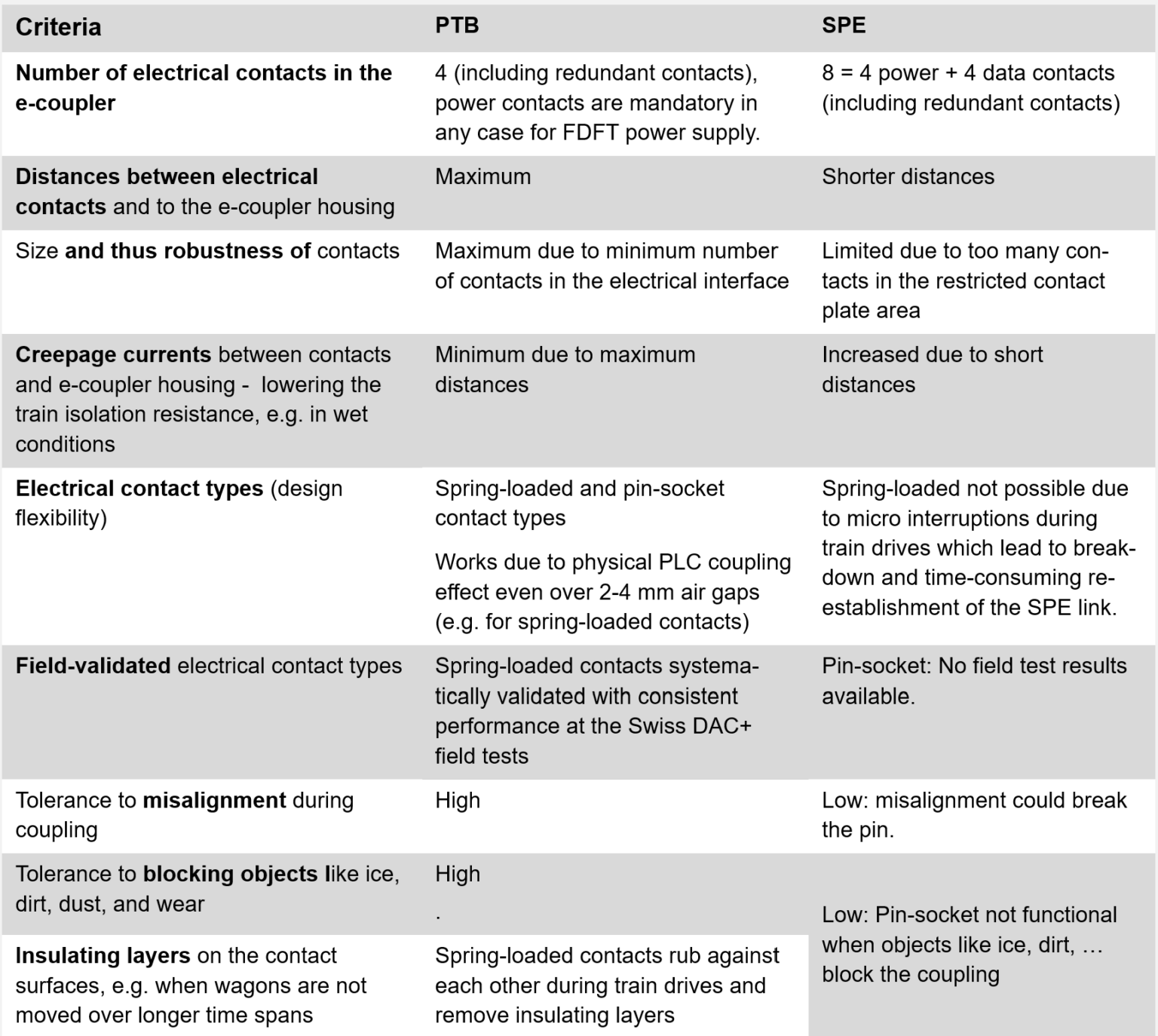
Freight train coupling is mechanically harsh. Electrical contacts are among the most failure-sensitive elements in harsh coupling environments, and minimizing their number is therefore key.

PTB avoids sensitive data contacts in the coupler by transmitting communication signals over the power contacts, which are designed for high mechanical robustness.

Implication: Additional SPE electrical contacts and restriction to only the pin-socket contact type introduce additional failure sources.

2. Economical Scalability

Installation Complexity

The Challenge:

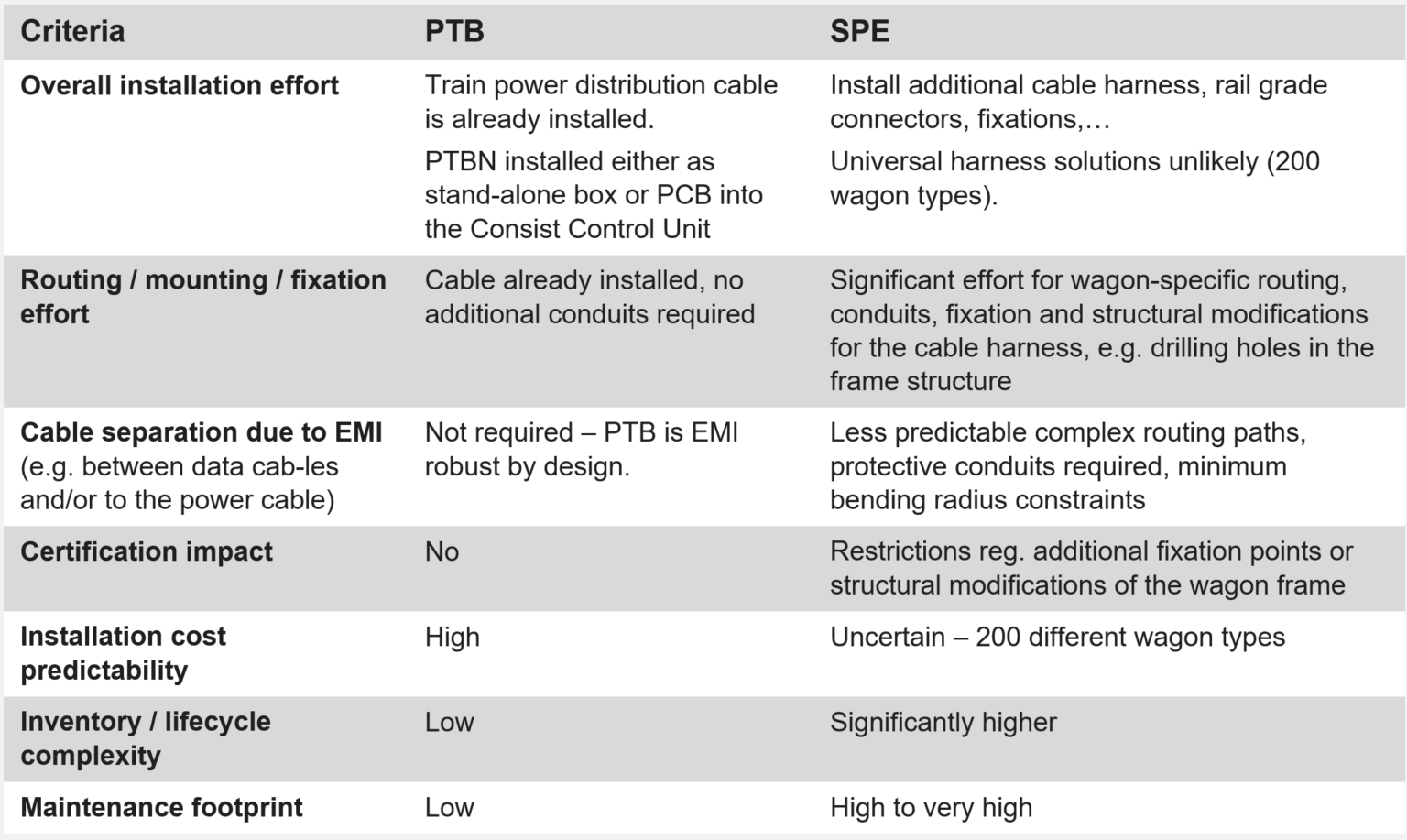
European rail freight fleets include more than 200 wagon types, differing in frame geometry, available mounting space and equipment layout.

Rollout scalability depends on minimizing configuration diversity.

Freight wagons are certified vehicles: Structural interventions — such as drilling additional mounting holes or adding new mechanical supports — may trigger re-certification procedures.
Implications:

SPE network parallel to the power cable installed within the limited space of freight wagons increases wagon-specific routing variation, engineering effort and inventory complexity.

Installation complexity is inherently higher in an SPE architecture.

Costs and Economics

Rail freight operates under narrow margins, particularly in single wagon load traffic.

The guiding principle defined by the Swiss Federal Office of Transport for the backbone of the Full Digital Freight Train was and is clear:

Robust under harsh conditions

Economically bearable

Not over-engineered

Implications:

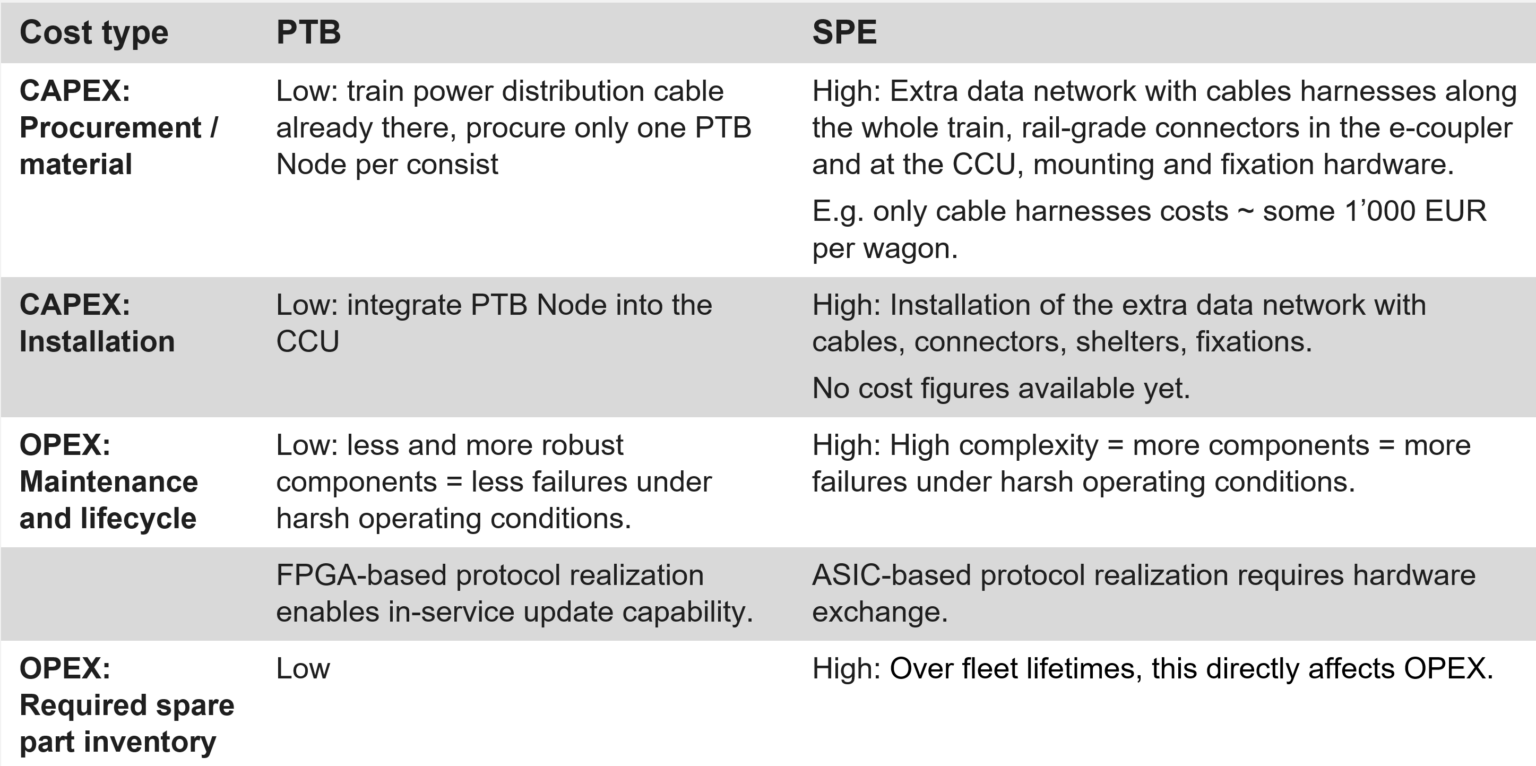
Estimated lifecycle costs for SPE architectures are much higher than for PTB.

This is a predictable consequence: more infrastructure layers mean higher lifecycle cost.

3. Validation for Deployment

Large-scale DAC rollout represents a systemic investment decision. DAC introduces new technical territory.

Laboratory verification alone is insufficient.

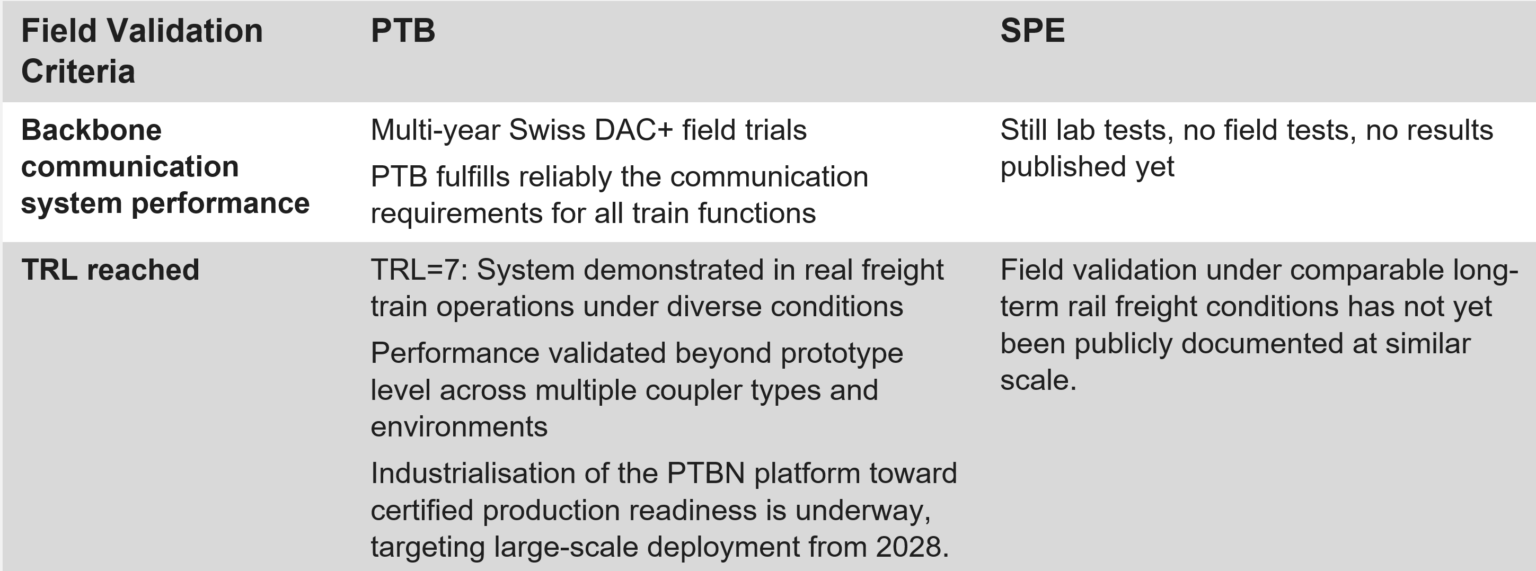
Backbone performance must be validated under real mechanical, environmental and operational rail freight conditions, allowing practical experience to guide further development and reducing the risk of fundamental design assumptions proving incorrect only after years of development or even deployment.

Experiences in the recent history of DAC developments prove that concepts

developed mainly in theory and laboratory environments

or have been taken over from the passenger train

carry a high risk of fundamental assumptions proving incorrect once exposed to real freight train conditions.

Late corrections then lead to complex modifications, higher costs, and increased system vulnerability. Therefore, early validation in real operating environments is essential for developing robust and reliable DAC systems.

Implication: Deployment readiness depends on demonstrated operational behaviour. Advantage PTB.

4. Comparison Summary

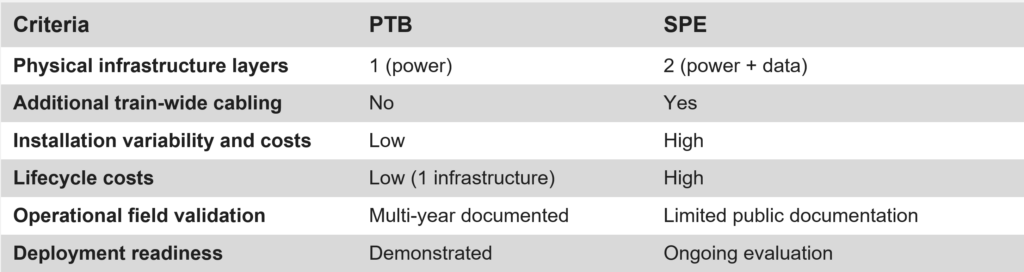
The combination of architectural simplicity, industrial hardware platform and sustained operational validation positions PTB as a backbone solution ready for large-scale deployment in European rail freight.

EXPLORE THE EVIDENCE